

Spotlight Resource:
Social Transformation through Occupation Evolving Premises
These premises, and accompanying questions, were presented at OSE 2025 as starting points for dialogue and should not be interpreted or used as as finalized premises and do not represent the “view” of the ISTTON Network. Rather these premises are meant as a beginning place for discussion around guiding and identifying social transformation through occupation projects and work.
Title: A Collective Critical Analysis and Positioning of Actions for Social Transformation
Abstract: For those who seek to advance social transformation through occupation by employing research, practice, activism, and volunteer experiences, it is essential to continually critically reflect on initiatives and programs through theoretical-methodological analysis that asks: What social transformation is being produced and towards what kind of society? The first aim of this workshop was to instigate a critical collaborative analysis of initiatives – and the occupation(s) they hope to mobilize for social transformation. The second aim, through large group discussion, was to articulate questions, values, and principles that drive social transformation work. This was a potential initial step towards the development of frameworks within the International Social Transformation Through Occupation Network (ISTTON) that can be utilized to regularly examine assumptions and values related to social transformation, methods, and evaluation.
Workshop facilitators opened dialogue by critically examining two initiatives currently underway, identifying key questions and analytical approaches that revealed facilitatory or problematic qualities of the projects’ processes. Facilitators then invited participants to form small groups to examine additional example projects. The objective was to create an authentic and supportive space for critique and interrogation based on presented analytical frames of projects oriented toward social transformation through occupation. Rooting this objective in concrete initiatives allowed for clearer examinations while instigating important discussions about how to evaluate this work and its underlying values. The intention was to foster analytical capacities to examine social transformation initiatives while generating concrete actions to support current work underway.
| Premise | Questions for Prompting Critical Analysis and Reflexivity |
|---|---|
| Actors are engaged in ongoing critical reflexivity throughout the process. |
|
| Transformation addresses social elements and power relations. |
|
| Transformation processes are enacted through equitable participation, building on strengths, and countering oppressive power relations. |
|
| Analysis and mobilization of occupation is necessary in the enactment of social transformation. |
|
Publications from ISTTON:
Ongoing Dialogues
Dr. Brenda Beagan shares information and advice around professionalism and activism. (June 11, 2024)
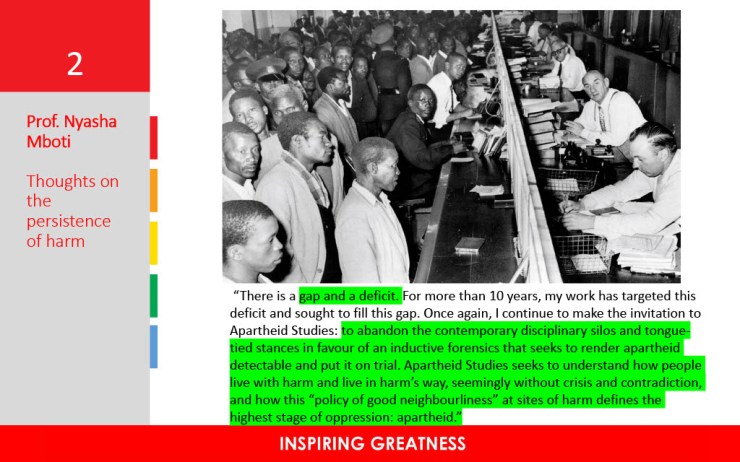
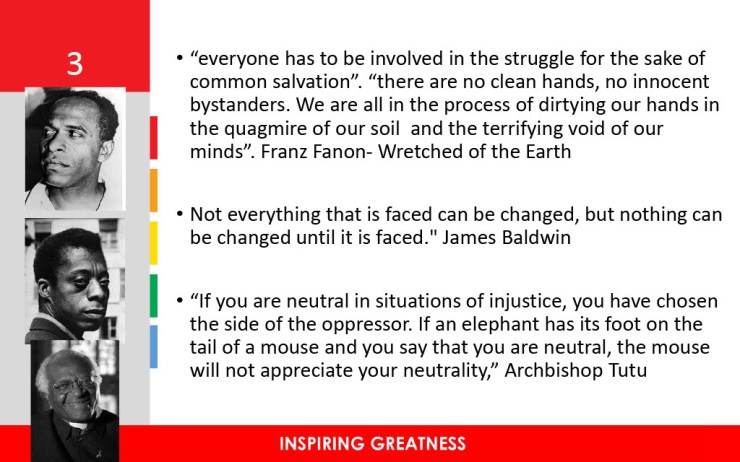
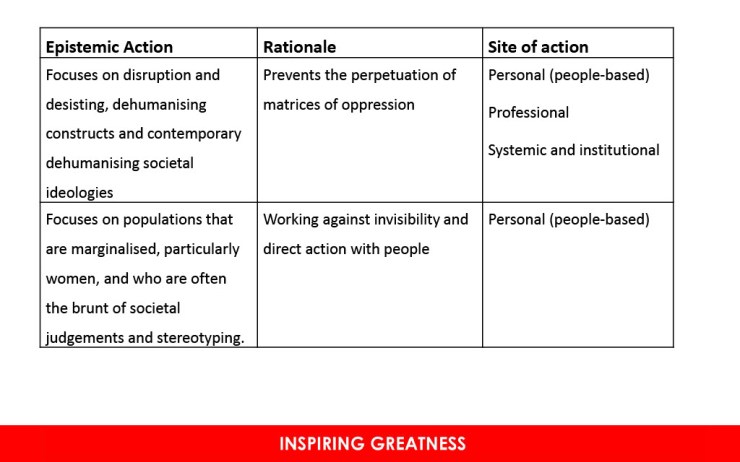
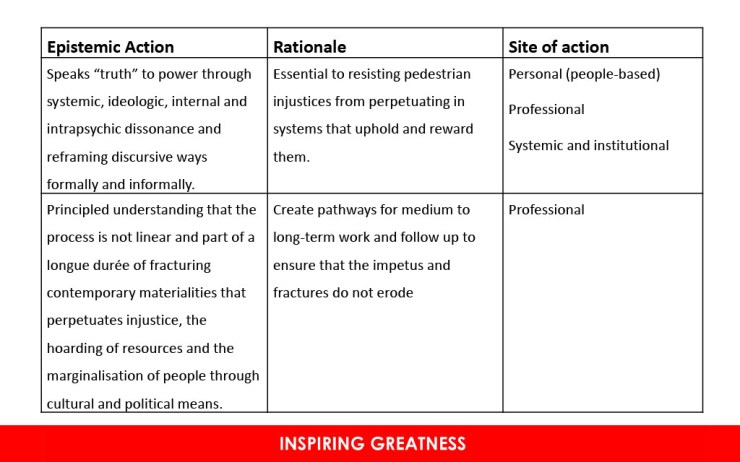
Dr. Chantal Christopher’s slides from her discussion on Acts of Doing, Dissonance, Disruption and Defiance: Building Critical Resistance into Practice (May 22, 2025)





Links to related websites or networks.
- Research, Consultancy & Education for Transition- DRIFT drift.eur.nl
- Society for the Study of Social Problems – (Network, Journal)https://www.sssp1.org/
- Norbert Elias Center for Transformation Design & Research https://www.uni-flensburg.de/nec/ueber-uns/norbert-elias-center-for-transformation-design-research/
- The Partnering Initiative https://thepartneringinitiative.org/
- Sustainable Transitions Research Network https://transitionsnetwork.org/

